PromptSpectra
October 24, 2026
Browse AI image prompts and copy them in one tap, right from your phone.
If you've ever uploaded a selfie to ChatGPT and typed "make this look better," you already know the problem: the result is usually generic, and sometimes the face doesn't even look like you anymore. The fix isn't a different tool. It's a better prompt.
This guide gives you five copy-ready ChatGPT prompts for photos, built for photo editing, portraits, and "pictures of yourself." Each one is a detailed, tested prompt that works for both men and women, and you'll also learn a simple formula for writing your own.
The best ChatGPT prompts for photos do three things. They tell ChatGPT to use your uploaded photo as the face reference. They describe the camera position, pose, clothing, and lighting in precise detail. And they end with a short list of things to avoid, like text, watermarks, or changes to your facial features.
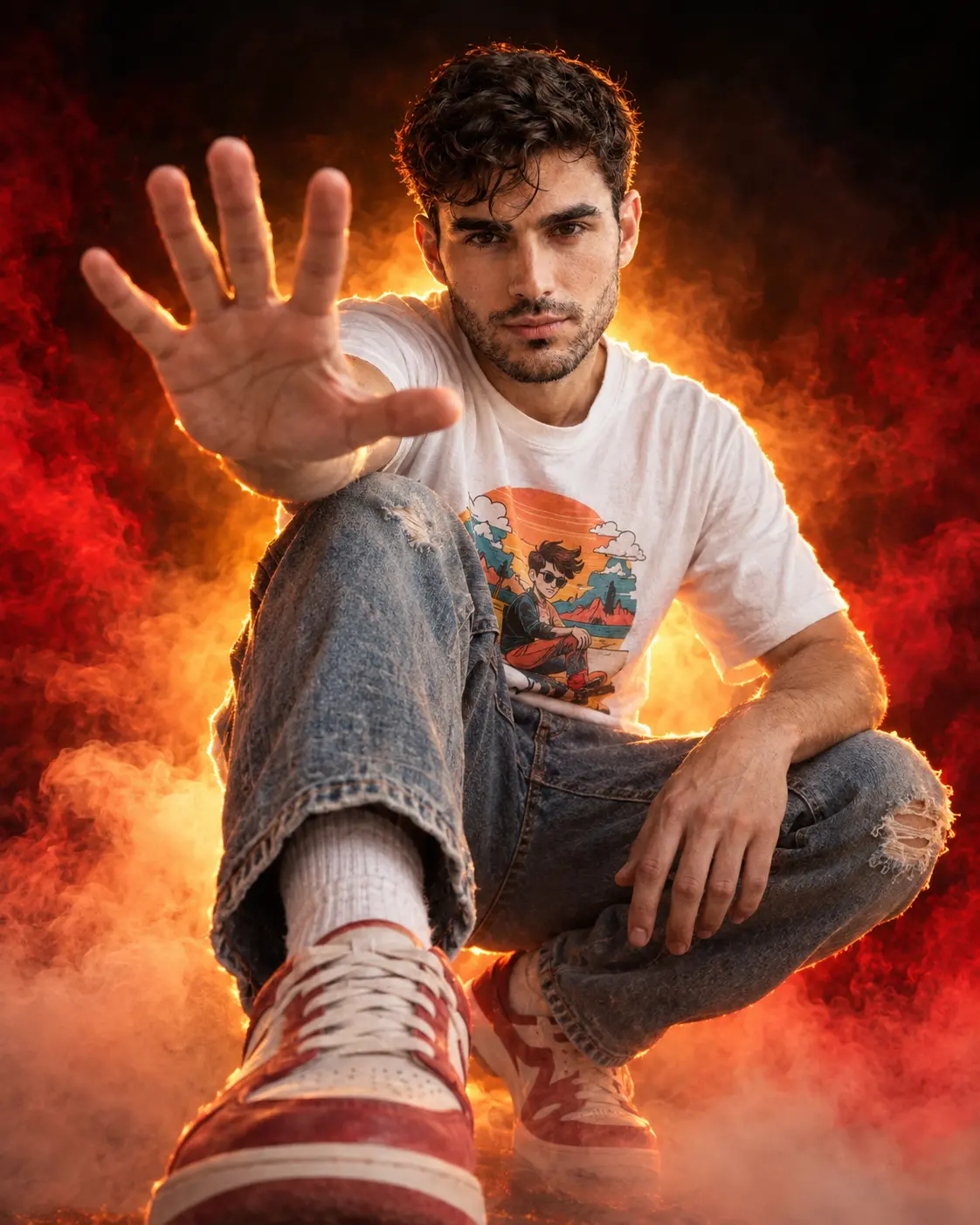
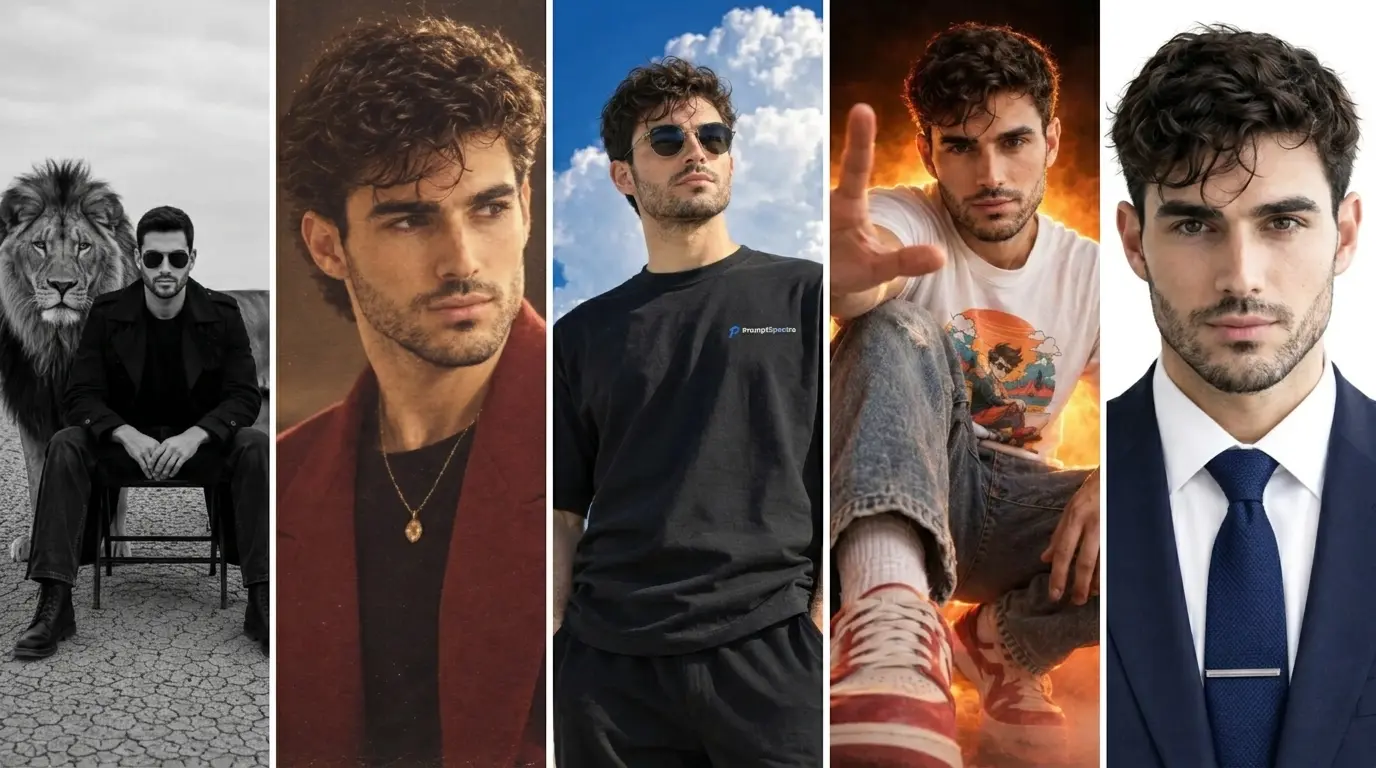
The five prompts below follow that structure: a desert editorial portrait with a lion, a cinematic low-angle beach portrait, a 1980s glamour portrait, a professional corporate headshot, and a smoke portrait with orange-gold backlight.
Short prompts like "make my photo professional" leave ChatGPT guessing, so every result looks different and rarely matches what you imagined. A strong photo prompt answers six questions:
Two small habits make a big difference. First, describe the camera in plain physical terms ("eye level, about 4 to 5 feet from the subject") instead of vague words like "nice angle." Second, give head turns in degrees ("about 10 to 15 degrees to the right") so you can fine-tune across attempts.
This is also why the prompts below are long. Each one locks down the pose, the direction of the gaze, the outfit, the lighting, and the background, so ChatGPT has far less room to guess. Longer prompts aren't better by themselves. Specific prompts are better.
Only upload photos you own or have permission to use.
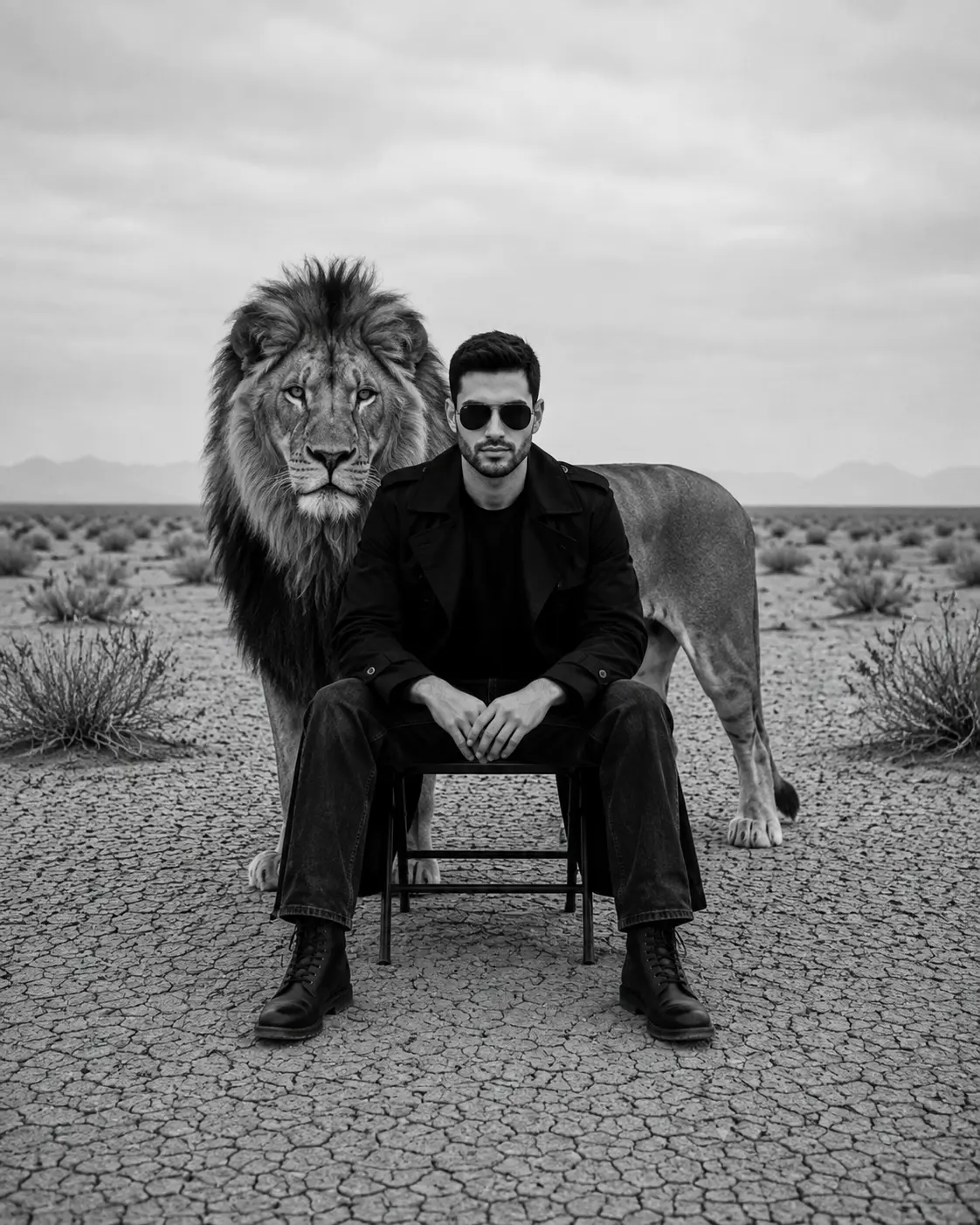
Best for: dramatic, high-fashion style portraits with a wild, cinematic feel.
This prompt places you in a wide desert scene with a lion beside you, styled like an editorial shoot. It's a good example of how to direct a complex scene with a person, an animal, and a landscape all in one frame.
Using the attached photo as the direct reference for the face and likeness, generate the following: Create a hyper-realistic black-and-white editorial photo of the person from the attached photo sitting on a simple black metal folding chair in an open desert with cracked dry earth. Aspect ratio: 4:5 vertical portrait. Camera angle: eye-level, straight-on front-facing shot, camera positioned directly in front of the subject at a fixed medium distance of approximately 5 meters, not angled, not tilted, subject and lion both centered in frame, full body visible from head to feet. Pose: person seated with legs apart, forearms resting on knees, hands loosely clasped together, calm confident expression, eyes looking directly into the camera lens, head facing forward with no tilt. Lion position: a large male lion standing directly behind the chair, its head positioned close beside the person's left shoulder (viewer's left), head turned toward the camera with its face clearly visible and readable. The lion's body extends diagonally behind the person, with its hindquarters and back angled away toward the right side of the frame (viewer's right), so the head is near the left shoulder while the body trails off to the right behind the person. Lion's eyes looking directly toward the camera lens, calm alert expression, thick full mane clearly detailed, front paws visible near the base of the chair. Clothing: a long tailored black trench coat worn open over a plain black top, straight-leg denim trousers, black lace-up leather boots, dark sunglasses matching the reference photo's face shape. Background: flat open desert landscape with dry cracked earth in the foreground, sparse dry shrubs scattered on either side, hazy pale sky, soft even overcast lighting. Lighting: soft natural overcast daylight, minimal shadow, even exposure across the whole frame. Color treatment: true black-and-white, high detail, rich tonal range from deep black to bright white, no color. Style: high-fashion editorial photography, ultra-realistic, sharp focus on both the person and the lion, cinematic composition. Mood: powerful, calm, striking, fearless. Negative: no color, no readable text, no logos, no aggressive lion posture, no lion looking away from camera, no full side profile of the lion, no side profile of the person, no smiling expression, no tilted head, no lion's head on the right side, no lion's body extending to the left.
Copy the full prompt with the Copy button on the card below.
This prompt works because it leaves very little to guesswork. Here is what each part does:
Customize it:
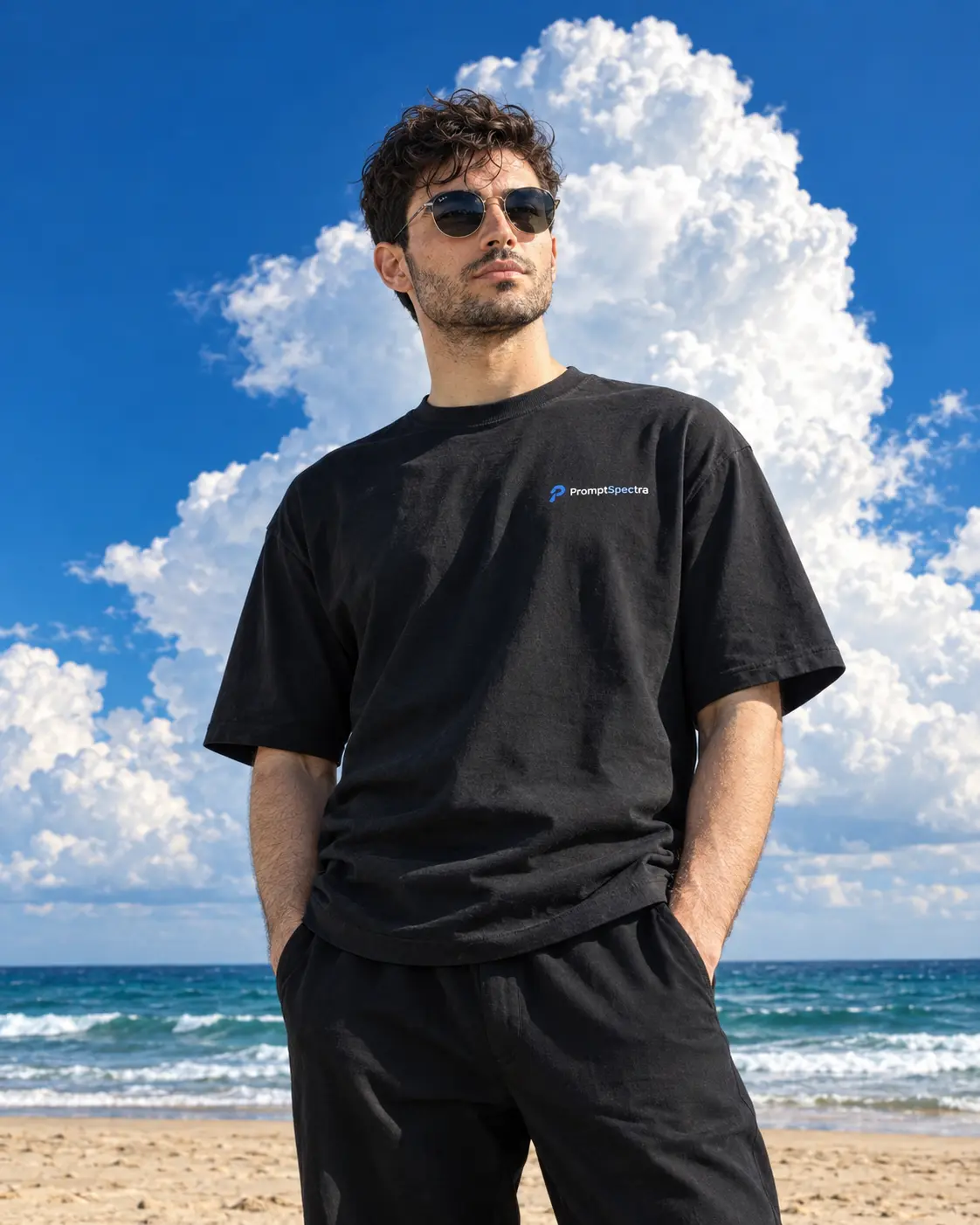
Best for: powerful, movie-style portraits and travel or lifestyle content.
A low camera angle makes the subject look taller and stronger, and a beach setting adds natural light and movement. This prompt shows how precise camera instructions can change the whole mood of a photo.
Using the attached photo as the direct reference for the face and likeness, generate the following: Create a photorealistic, ultra-high-definition portrait of the person from the attached photo standing on a serene beach, matching the subject’s actual gender exactly as shown in the reference photo. Preserve their recognizable facial identity, natural skin tone, and facial hair exactly as shown (keep a beard or stubble if present, keep it clean-shaven if the reference is clean-shaven).
This prompt is built to work for both men and women from one text, and to keep the camera angle and scenery fixed. Here is what each part does:
Customize it:
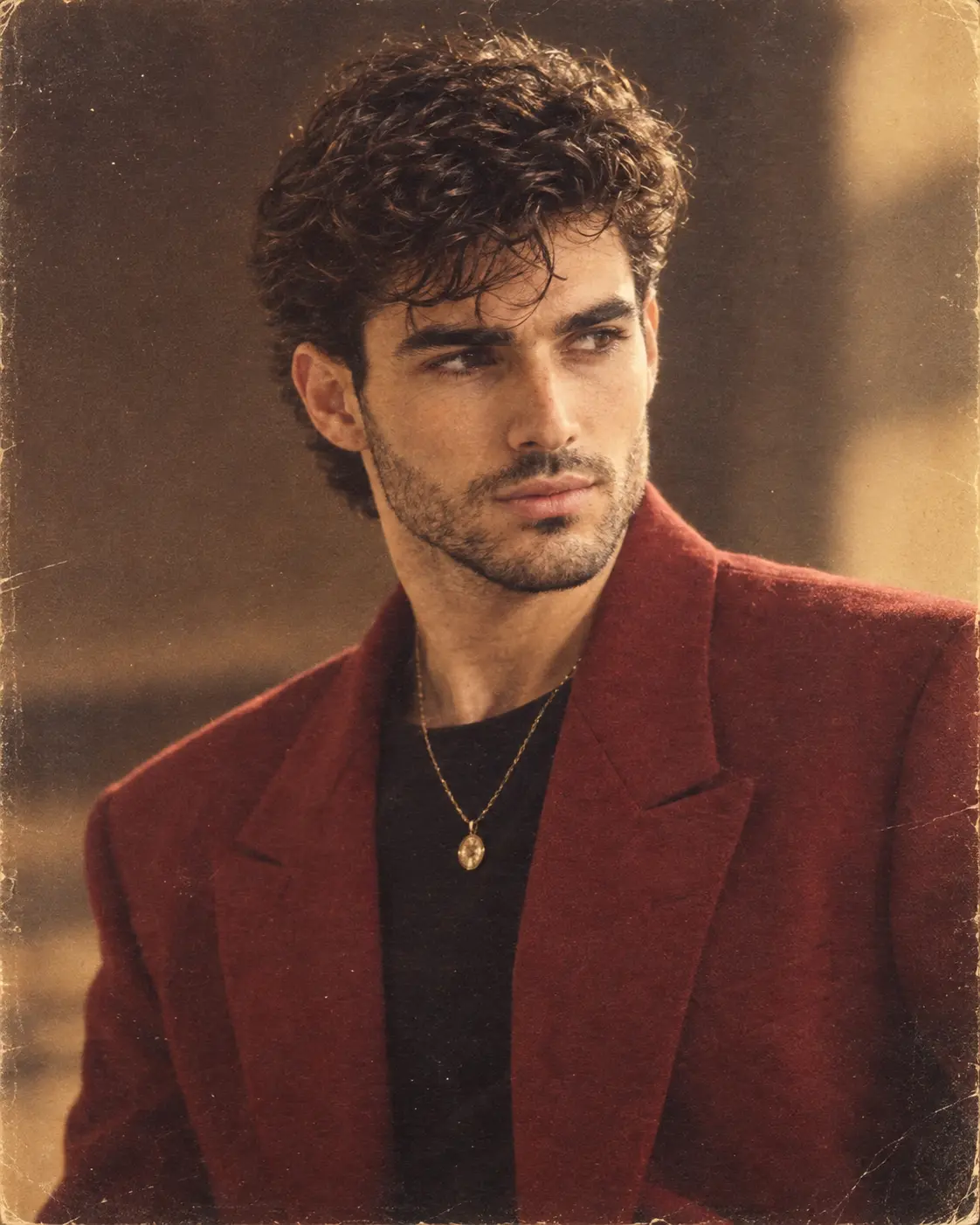
Best for: retro looks, fashion moodboards, and bold, stylish profile pictures.
Padded shoulders, confident styling, and polished lighting: this prompt recreates the look of a 1980s glamour studio portrait.
Using the attached photo as the direct reference for the face and likeness, generate the following: Create an ultra-realistic 1980s vintage portrait of the person from the reference photo, matching the subject's actual gender exactly as shown.
This prompt turns one request into two authentic 1980s looks, one for men and one for women, and it separates the era's styling from its photo quality. Here is what each part does:
Customize it:
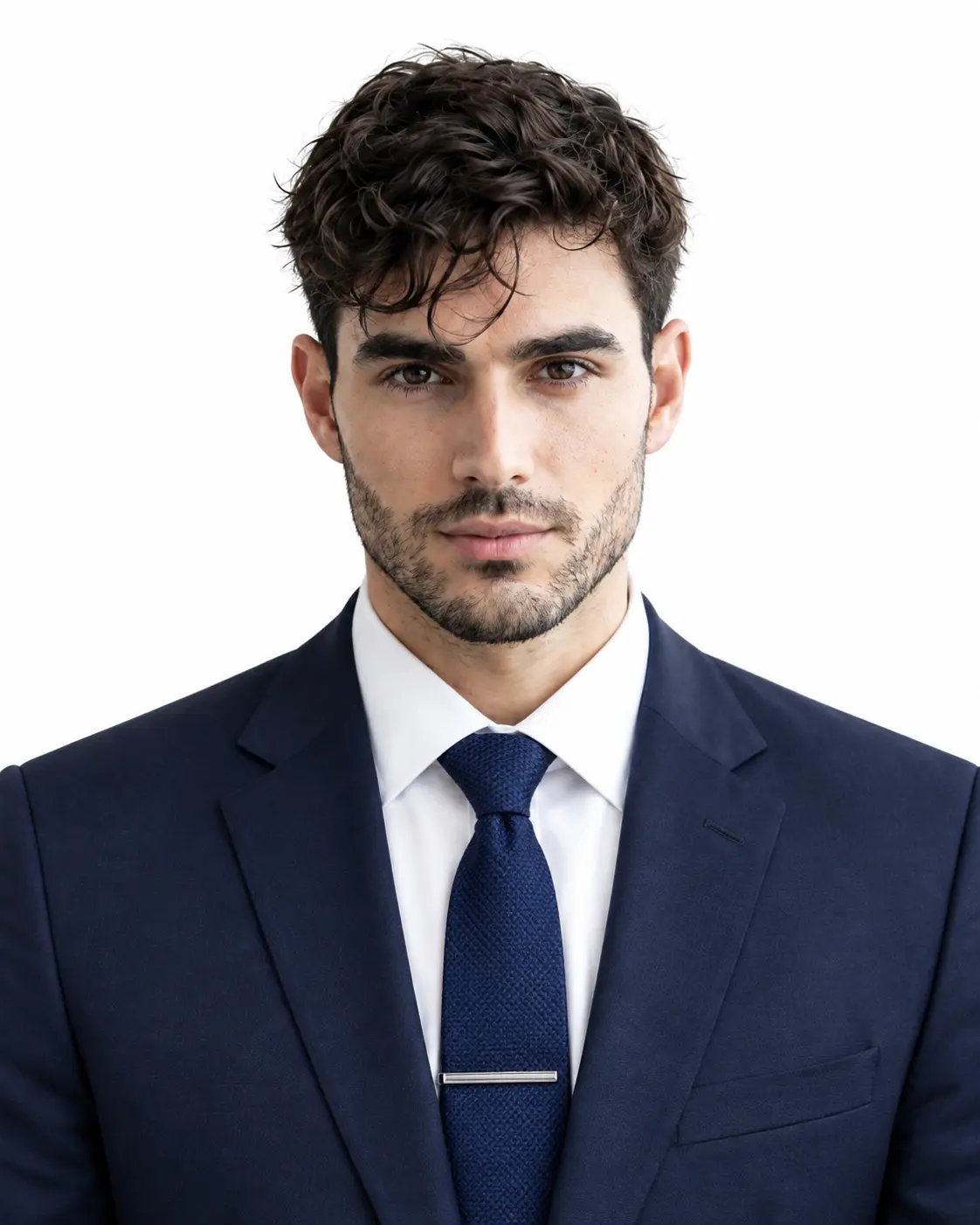
Best for: LinkedIn, resumes, company websites, and speaker bios.
A clean, professional headshot is the prompt most people will use the most. It shows how a calm background, soft lighting, and simple clothing produce a result that looks trustworthy.
Using the uploaded photo only as the strict facial identity reference, generate the following: Preserve the exact recognizable face, facial proportions, skin tone, hairstyle/hairline, beard pattern (if present), eye shape, nose, lips, jawline, and natural features. Do not beautify, reshape, de-age, or alter the identity, matching the subject's actual gender exactly as shown in the reference photo.
This is the most "locked down" of the five prompts, because a headshot has to look like you first and stylish second. Here is what each part does:
Customize it:
Best for: moody, artistic portraits and eye-catching social media posts.
Drifting smoke lit from behind by a warm orange-gold light creates instant atmosphere. This prompt is a strong example of how backlight and background effects can carry a photo.
Use the uploaded photo only as the facial identity reference. Preserve the person’s exact facial identity, facial proportions, natural skin tone, and defining features with strong visual continuity, matching the subject’s actual gender exactly as shown in the reference photo. Do not generate a different face. Keep facial hair exactly as shown in the reference (beard or stubble if present, clean-shaven if the reference is clean-shaven). Create a hyper-realistic, ultra-high-resolution, large-format cinematic low-angle smoke portrait of the same person, in a premium streaming-series poster style. Aspect ratio: 4:5 vertical.
This is the most complex pose of the five, so the prompt spends its words on the body, the light, and the color. Here is what each part does:
Customize it:
Aspect ratio: 4:5 vertical portrait.
Camera framing (locked, must match exactly): captured from mid-thigh up to the top of the head, with the camera at a dramatic low angle looking slightly upward, emphasizing the subject’s presence and confidence and enhancing the scale of the scene.
Pose (locked, must match exactly): standing upright and relaxed, both hands casually tucked into the pockets of the trousers, head tilted slightly upward with the gaze fixed toward the sun. Calm, confident, relaxed expression.
Hair (adapt to the subject’s gender as shown in the reference photo, matching the reference photo’s own length, color, and texture): slightly tousled by the sea breeze with natural movement. If the subject is male, keep the natural cut and length from the reference. If the subject is female, keep the natural length and texture from the reference, worn loose with strands gently lifted by the breeze, with no facial hair.
Clothing (adapt cut to the subject’s gender as shown in the reference photo): a loose-fitting, oversized black T-shirt with a small blue and white “PromptSpectra” logo on the left chest, paired with loose, full-length black trousers with side pockets. Boxier relaxed fit for a male subject, or a relaxed oversized fit with a slightly more flattering drape for a female subject. The logo text must appear exactly once, spelled exactly “PromptSpectra”.
Accessories: stylish round black sunglasses with silver corner accents, same for both genders.
Background (locked, must match exactly): a low horizon line with tan sand and deep blue-green ocean water. Dominating the sky directly behind the subject is a massive, towering, brilliantly white cumulonimbus cloud formation set against a vibrant deep blue sky.
Lighting (locked, must match exactly): bright, natural, direct sunlight illuminating the right side of the face and neck, creating sharp, realistic shadows in the folds of the black clothing.
Camera and style: 35mm lens, f/8, deep depth of field, high dynamic range, crisp focus, vivid colors, cinematic and majestic atmosphere, realistic skin texture, 8K resolution.
Negative: no shorts, no bare knees or bare legs, no readable text other than “PromptSpectra” on the chest logo, no other logos, no watermark, no duplicated or misspelled logo text, no altered facial identity or skin tone, no changes to hair length or facial hair from the reference photo, no masculine styling forced onto a female subject or feminine styling forced onto a male subject, no cropped-out head, no overcast or dull sky, no distorted sunglasses, no plastic skin, no cartoon or CGI appearance.
Copy the full prompt with the Copy button on the card below.
Aspect ratio: 4:5 vertical portrait, chest-up framing.
Pose: posing in a confident three-quarter profile while looking to the side.
Hair (adapt style to the subject's gender as shown in the reference photo, color and texture matching the reference photo): if the subject is female, voluminous feathered 80s hair with soft layers and natural body; if the subject is male, thick, slightly feathered or wavy 80s hairstyle with natural volume, styled to match the same authentic era feel.
Grooming and makeup (adapt to the subject's gender as shown in the reference photo): if the subject is female, soft winged eyeliner and muted berry lipstick, natural glamorous 80s makeup; if the subject is male, clean natural grooming with no makeup, well-defined features.
Accessories: if the subject is female, bold gold hoop earrings and a vintage pendant necklace; if the subject is male, a simple vintage pendant necklace, no earrings unless naturally present in the reference photo.
Clothing (adapt cut and styling to the subject's gender as shown in the reference photo, both versions authentically 1980s): if the subject is female, a deep pink/red oversized padded-shoulder blazer worn over a black top; if the subject is male, a deep burgundy/red oversized padded-shoulder blazer worn over a black shirt or top, boxier masculine tailoring through the shoulders.
Lighting and color treatment: warm cinematic lighting, 35mm analog film look, soft focus, faded colors, subtle grain, dust and scratches, authentic nostalgic 1980s photography — must feel like a genuine vintage print from the era, not a modern retro filter.
Negative: no readable text, no logos, no watermark, no modern digital sharpness or clarity, no altered facial identity or skin tone, no changes to hair color from the reference photo, no masculine styling forced onto a female subject or feminine styling forced onto a male subject, no makeup on a male subject, no color other than the warm faded analog palette described, no modern clothing or accessories.
Copy the full prompt with the Copy button on the card below.
Create a hyper-realistic professional corporate headshot, framed from the upper chest upward, with the subject perfectly centered and facing directly toward the camera. Keep the head straight, shoulders level, posture upright, and expression calm and approachable with a very subtle natural smile.
Aspect ratio: 4:5 vertical portrait, profile-headshot style framing.
Clothing (adapt cut and styling to the subject's gender as shown in the reference photo): if the subject is male, a tailored dark navy business suit, crisp white dress shirt, and textured navy tie with a simple silver tie clip, boxier masculine tailoring; if the subject is female, a tailored dark navy blazer with a fitted feminine cut over a crisp white blouse or dress shirt with a relaxed open collar, or a matching navy tie/bow detail if desired.
Background: a clean seamless pure white background with no distractions, no texture, no gradient.
Lighting: soft, even professional studio lighting from the front with gentle fill light, natural skin tones, subtle facial dimension, minimal shadows, and realistic skin texture.
Camera and quality: eye-level camera, 85mm portrait lens, natural perspective, symmetrical passport-style composition, premium LinkedIn/executive portrait aesthetic, photorealistic, ultra-detailed, 8K quality, keep facial details extremely sharp and zoom-safe.
Negative: no plastic skin, no excessive retouching, no harsh shadows, no distorted facial features, no text, no logos, no watermark, no altered facial identity or skin tone, no masculine styling forced onto a female subject or feminine styling forced onto a male subject, no busy or textured background.
Attach your reference photo when generating — face/likeness stays locked while the centered pose, navy suit styling, white background, and sharp studio lighting follow this description exactly.
Copy the full prompt with the Copy button on the card below.
Pose (locked, must match exactly): the subject is crouching low with one knee raised prominently toward the camera and the other leg folded beneath. The left hand is extended directly toward the lens with the palm fully open and all five fingers clearly separated, creating strong foreground perspective. The right hand rests naturally on the lowered knee. The torso leans slightly forward and is balanced over the crouched legs. The face is slightly tilted downward toward the camera, eyes looking calmly into the lens, eyebrows relaxed, lips gently closed, expression confident and composed. Natural shoulder width and normal body proportions, not exaggerated or broadened.
Hair and grooming (adapt to the subject’s gender, keeping the reference photo’s own length, color, and texture as the base): if the subject is female, long, naturally dark hair with a center part falling naturally over both shoulders and down the back, with loose strands framing the face, and subtle natural makeup. If the subject is male, the natural cut and length from the reference, neatly styled with natural texture and a few loose strands, clean natural grooming with defined brows, no makeup, and facial hair kept as in the reference. For both: the skin keeps the natural tone from the reference photo, with realistic texture and soft highlights.
Outfit (adapt cut to the subject’s gender): a white graphic T-shirt with a colorful cartoon print (an original design, not a real character or brand), light damaged denim jeans, white ribbed crew socks, and pale red-and-white sneakers. If the subject is female, a relaxed feminine fit. If the subject is male, a relaxed straight fit with a natural shoulder line.
Setting and lighting (locked): a dark studio-like setting filled with thick white smoke surrounding the subject from the ground upward, with a powerful bright orange-gold light glowing directly behind the subject through the smoke and a mostly black upper background, creating a dramatic halo around the silhouette. Strong backlighting produces a bright golden rim along the hair, shoulders, arms, and legs, while the front of the subject stays softly illuminated. The dense smoke catches both the warm orange-gold backlight and a deep crimson-red ambient glow, so the smoke carries soft red tints near the edges.
Color grading and camera (locked): cinematic color grading built around a striking bright orange-gold versus deep crimson-red contrast, deep black shadows, glowing amber highlights, skin-balanced warm midtones that keep the natural tone from the reference, controlled saturation, soft atmospheric contrast, gentle bloom around the backlight, subtle film grain, and smooth highlight roll-off. Low-angle camera with strong depth created by the extremely close foreground hand and shoe perspective.
Negative: different face, altered identity, changed gender, changes to hair length or facial hair from the reference, makeup on a male subject, changed skin tone, distorted face, deformed hands, missing fingers, extra fingers, incorrect crouching pose, flat perspective, harsh skin, excessive blur, exaggerated or broadened shoulders, blue or teal tones in the lighting, smoke, or sneakers, readable text, real brand logos, watermark.
Copy the full prompt with the Copy button on the card below.
Can ChatGPT edit my own photos? Yes. You can upload a photo and ask ChatGPT to restyle it, change the lighting or background, or create a new scene around you. Results can vary, which is why the prompts above clearly state what must stay the same.
How do I keep my face looking like me? Start with an identity line such as "Using the attached photo as the direct reference for the face and likeness," use a clear front-facing reference photo, and avoid instructions that change your features. If the face drifts, regenerate and ask ChatGPT to match the reference more closely.
What are the best ChatGPT prompts for photo editing? The best prompts are detailed. They name the camera position, pose, clothing, lighting, and background, and they list what to avoid. The five prompts on this page are good starting points for different looks.
Why are these prompts so long? Long prompts aren't magic, but specific ones work better. Each of these locks down the pose, gaze direction, outfit, lighting, and background, so ChatGPT has less room to guess and your results stay more consistent.
Why does ChatGPT sometimes change my face? Image models generate a new picture rather than editing pixel by pixel, so small changes can happen. A strong identity line, a good reference photo, and fewer conflicting instructions all reduce this.
Do these prompts work in Gemini or Leonardo AI? They're written in plain language, so you can try them in other tools, but results will differ. Some tools also limit prompt length, so you may need to shorten them. For a closer look, read our Gemini vs Leonardo AI vs ChatGPT comparison.
How do I copy a prompt? Use the Copy button on the prompt card under each section, then paste it into ChatGPT along with your reference photo.
Great ChatGPT photo results come from clear direction, not luck. Start with an identity line, describe the camera, pose, clothing, and lighting, add a short list of things to avoid, and change one detail at a time. Try the five prompts above, then adapt them to your own photos.
Want more? Browse our prompt library for ready-to-use image prompts, each with step-by-step instructions.