
PromptSpectra
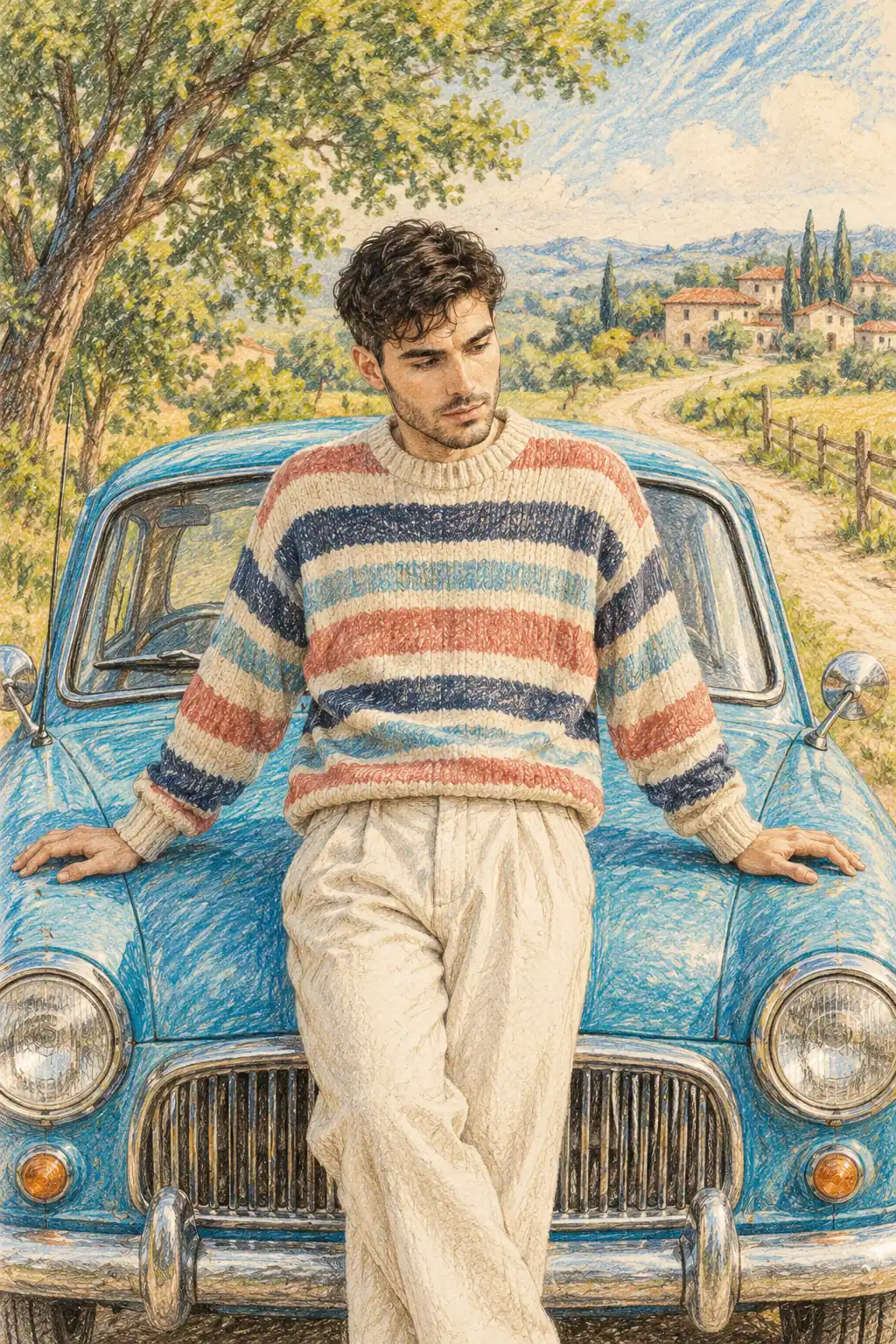
A nostalgic colored pencil and wax crayon illustration made from your own photo, showing you leaning against a classic vintage blue car on a quiet countryside road. You wear a cozy striped knit sweater and relaxed cream trousers, with your arms resting on the car’s hood and your gaze turned gently away. Behind you are tall trees, a winding sandy road, a rustic fence, distant terracotta-roofed houses and a soft blue sky, all drawn on warm ivory paper. The prompt adapts automatically for women, men and gender-neutral looks, including hair, facial hair and clothing fit. It suits profile pictures, travel-journal style art, gifts, prints and social media posts.
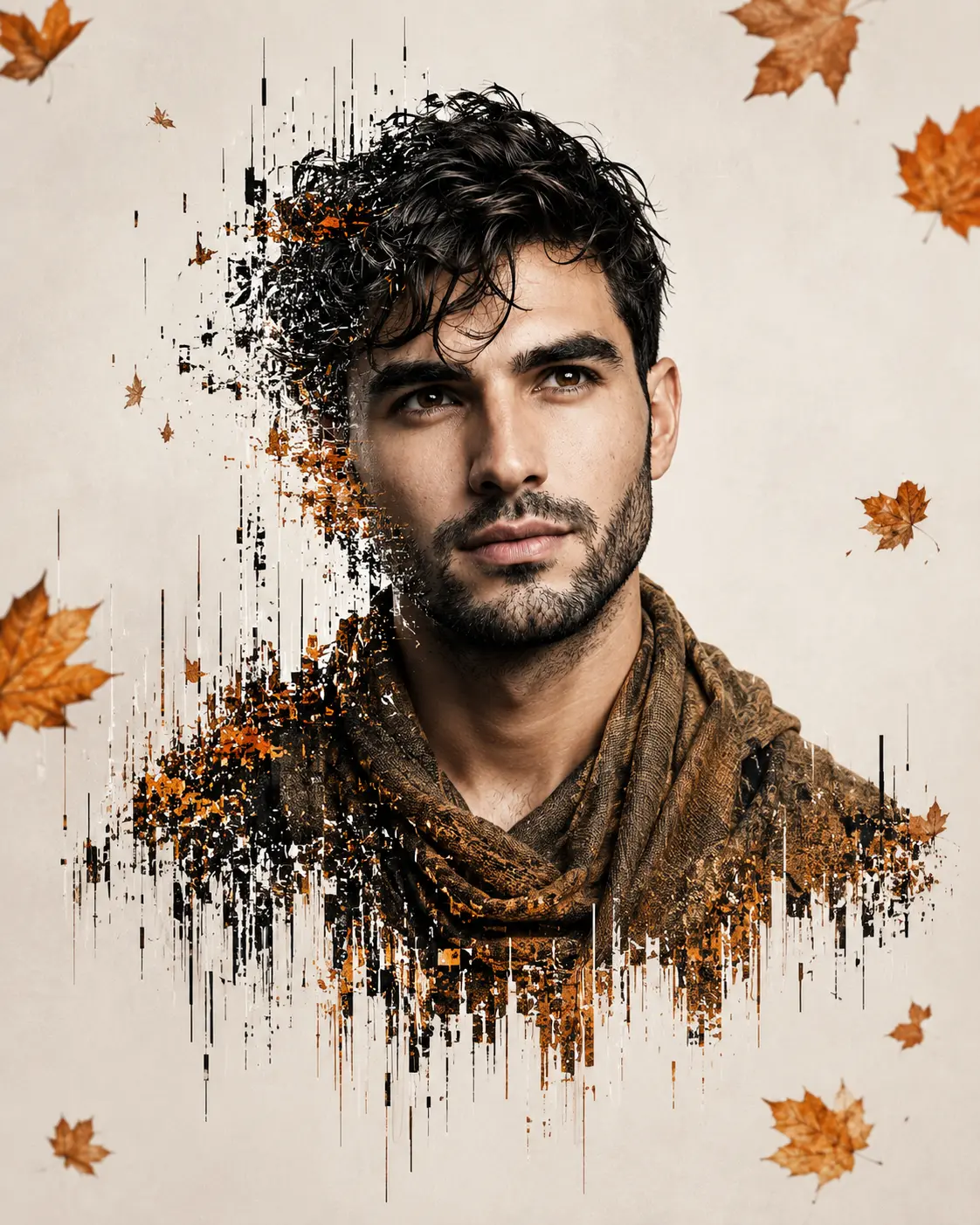
A conceptual portrait where the hair and clothing dissolve into a digital glitch effect blended with warm autumn leaves — sharp photorealistic face contrasted with data-fragment texture.
Use the user's uploaded photograph as the primary reference for the subject's identity and use the described visual concept as the creative guide. Create a highly detailed, nostalgic countryside illustration featuring the same recognizable person leaning against the front of a classic vintage blue automobile on a peaceful rural road. Preserve the person's recognizable facial identity, natural skin tone, face shape, eyes, nose, lips, jawline, eyebrows, apparent adult age, and facial-hair pattern wherever applicable. The subject must remain recognizable as the person in the uploaded photograph. Do not replace them with a generic model or invent a different identity. Adapt the hairstyle, facial hair, clothing, body styling, and overall gender presentation naturally to the person shown in the reference. For a masculine-presenting subject, retain appropriate natural masculine features and adapt the outfit accordingly; for a feminine-presenting subject, retain appropriate natural feminine features and adapt the outfit accordingly; for an androgynous or gender-neutral subject, preserve the existing presentation without forcing exaggerated gender characteristics. Do not automatically assign long hair, short hair, makeup, a beard, jewelry, or gender-specific clothing unless supported by the reference or appropriate to the chosen styling. Pose and body language: Position the subject centrally in the foreground, leaning comfortably backward against the front edge of the car's hood. Extend both arms naturally outward to either side, with the hands resting on the blue hood. The palms and fingers should make believable contact with the car's surface, with anatomically correct hands, realistic finger lengths, natural wrists, properly aligned elbows, and believable shoulder positioning. Keep the torso relaxed and slightly reclined against the vehicle. Turn the head gently toward one side and direct the gaze downward and away from the camera, creating an unposed, introspective, peaceful expression. The body language should communicate freedom, nostalgia, quiet confidence, and the feeling of a spontaneous moment during a countryside journey. Maintain realistic body proportions, natural posture, accurate anatomy, and consistent perspective. Clothing and personal styling: Dress the subject in a cozy, oversized vintage knitted sweater featuring horizontal stripes in warm ivory, muted coral, dusty navy, and soft pale blue. Include a chunky yarn structure, clearly visible knitted loops, ribbed cuffs, a textured neckline, relaxed sleeves, and naturally formed fabric folds. Pair the sweater with loose-fitting, high-waisted vintage trousers in warm cream or light beige, with a relaxed silhouette, realistic creases, soft shadows, and subtle hand-drawn fabric details. Adapt the garment cut and fit naturally to the reference subject while maintaining the same timeless countryside fashion aesthetic. Preserve the person's natural hairstyle and hair texture, adding only subtle movement from a light outdoor breeze. Retain visible facial hair where applicable without inventing it. Avoid excessive accessories, modern logos, branded clothing, or distracting styling elements. Vintage blue automobile: Place a beautifully illustrated classic blue compact car directly behind the subject, viewed from a slightly elevated frontal perspective. The automobile should occupy much of the middle and lower composition, with its broad, curved hood forming the main background behind the subject's outstretched arms. Give the vehicle authentic vintage details, including a rounded hood, large curved windshield, narrow vertical chrome grille slats, classic circular or oval headlights, chrome bumper, small side mirrors, windshield wipers, a slim metal antenna, and subtle signs of age. Use rich sky blue and vintage turquoise paint, with lighter blue highlights, deeper blue shadows, small scratches, faded paint variations, and visible directional pencil strokes following the contours of the bodywork. Render the windshield with delicate reflections of the sky and landscape, softly suggested interior details, and believable glass transparency. The grille, headlights, mirrors, and bumper should feature carefully illustrated metallic reflections without becoming excessively glossy or photorealistic. Keep the car's geometry, proportions, and perspective coherent, and ensure the subject's hands, arms, torso, and clothing overlap the vehicle naturally. Countryside environment: Create a picturesque rural landscape surrounding the automobile. On the upper-left side, include a dense cluster of mature deciduous trees with thick brown trunks, branching limbs, layered olive-green foliage, golden-green leaves, and intricate dark sketch marks. Let the tree canopy frame the scene and extend across the upper-left portion of the image. A pale sandy dirt road should begin along the left side of the background, curve gently toward the center distance, and bend toward a small rural settlement on the right. Add subtle wheel tracks, uneven road edges, scattered pebbles, dry grass, and warm sunlight across the path. Surround the road with open fields of textured yellow-green grass, olive vegetation, patches of deeper green, and earthy natural variations. Include a simple rustic wooden fence with weathered posts and thin horizontal rails or wire running alongside part of the road. In the far distance, place several charming countryside houses with warm cream-colored walls, reddish terracotta roofs, modest windows, and surrounding trees. Add slender cypress-like trees and distant woodland to establish depth. Above the landscape, create a pale warm-blue sky with loose blue pencil strokes, delicate cream-colored clouds, and subtle atmospheric transitions. A faint horizon of low hills or wooded countryside may complete the setting. Keep the background detailed but balanced, allowing the subject and vehicle to remain the dominant focal points. Artistic medium and rendering: Render the entire image as an exquisite combination of traditional colored-pencil drawing, wax crayon, and dry-media illustration on warm ivory drawing paper. The artwork must visibly resemble a carefully hand-drawn illustration rather than a photograph with a pencil filter. Use layered pigments, broken outlines, crosshatching, irregular sketch marks, overlapping strokes, subtle paper grain, and small imperfections characteristic of traditional drawing materials. Make the pencil strokes follow the structure of each object: directional marks through the subject's hair, dense textured strokes across the knitted sweater, curved strokes along the car's hood, fine linear marks across the grille, loose energetic strokes through the trees and grass, and long sweeping blue strokes across the sky. Use a cohesive palette of vintage blue, turquoise, olive green, forest green, golden yellow, warm ivory, beige, rust, muted coral, and charcoal brown. Render the face with careful proportions, recognizable features, subtle shading, and expressive details while maintaining the same illustrated medium as the surrounding environment. Give the clothing a tactile, densely textured appearance and the automobile clearly defined contours. Keep distant foliage, houses, and hills slightly looser and more impressionistic. Balance fine detail with spontaneous hand-drawn energy. Lighting and atmosphere: Use soft, natural countryside daylight with gentle warm highlights on the subject's hair, face, sweater, and hands, as well as delicate reflections on the blue paint, windshield, and chrome. Shadows should be subtle, warm, and consistent with the surrounding environment. Introduce golden undertones into the fields and cream-colored paper while balancing them with the cooler blue car and sky. Create a calm, nostalgic, warm, quietly adventurous, and timeless mood. Avoid harsh studio lighting, exaggerated cinematic darkness, neon colors, artificial rim lighting, excessive contrast, and unrealistic HDR effects. Composition and framing: Use a vertical 2:3 portrait composition with a slightly elevated frontal viewpoint. Place the subject prominently in the center foreground, with the head, shoulders, extended arms, and hands clearly visible. Let the car fill most of the central and lower background, while the winding dirt road, tree canopy, green fields, distant houses, and open sky remain visible above and around the vehicle. Position the horizon in the upper portion of the frame and preserve sufficient landscape detail to establish a peaceful rural setting. Maintain clear separation between foreground, middle ground, and background. Ensure the face remains a primary focal point, followed by the striped sweater, blue vintage automobile, and winding countryside road. Keep the composition balanced, richly detailed, and visually cohesive. Avoid awkward cropping of the head, unintended cropping of the hands, excessive empty space, or unnecessary decorative borders. Final image quality: Produce a high-resolution, professionally finished illustration with strong facial identity preservation, natural body mechanics, realistic hand placement, convincing automobile geometry, detailed knitted fabric, layered vegetation, textured sky, and authentic colored-pencil marks. All elements must share the same traditional hand-drawn rendering style, with consistent lighting, perspective, color relationships, and paper texture. The final result should resemble a beautifully illustrated moment from a vintage European countryside travel journal: personal, artistic, nostalgic, peaceful, and visually memorable. Negative prompt: different person, unrelated face, identity loss, incorrect facial proportions, altered skin tone, forced gender transformation, stereotypical gender styling, invented facial hair, inappropriate makeup, plastic skin, beauty filter, doll-like face, distorted anatomy, unrealistic body proportions, extra limbs, extra fingers, missing fingers, fused fingers, broken wrists, floating hands, disconnected hands, unnatural arm extension, malformed shoulders, distorted car hood, incorrect grille perspective, asymmetrical headlights, duplicated mirrors, malformed windshield, floating vehicle parts, inconsistent perspective, futuristic vehicle, modern sports car, photorealistic background with illustrated subject, inconsistent art styles, smooth vector graphics, 3D render, glossy CGI, flat digital painting, excessive blur, muddy colors, oversaturated neon colors, harsh artificial lighting, extreme contrast, excessive sharpening, random text, illegible lettering, watermark, signature, logo, decorative frame, cropped head, unintentionally cropped hands, cluttered composition, low resolution, compression artifacts. Reference image instruction: Use the uploaded photograph to determine the subject's identity, natural facial characteristics, skin tone, hairstyle, facial hair, and gender presentation. Use the scene description to establish the pose, clothing aesthetic, vintage blue car, countryside environment, composition, lighting, and colored-pencil rendering. If a separate example artwork is provided, use it as a visual guide for composition and artistic style, not as the source of the subject's identity. Do not copy the example model's unsupported physical characteristics onto the uploaded person.

Get more prompts in the app
PromptSpectra for Android, free on Google Play
1. Go to ChatGPT 2. Attach your reference photo (a clear, front-facing photo with good lighting works best) 3. Paste the full prompt above and send it 4. If the first result is not perfect, regenerate 2 to 3 times, as ChatGPT gives slightly different results each time 5. Optional: change the car color, sweater stripes or time of day to suit your style
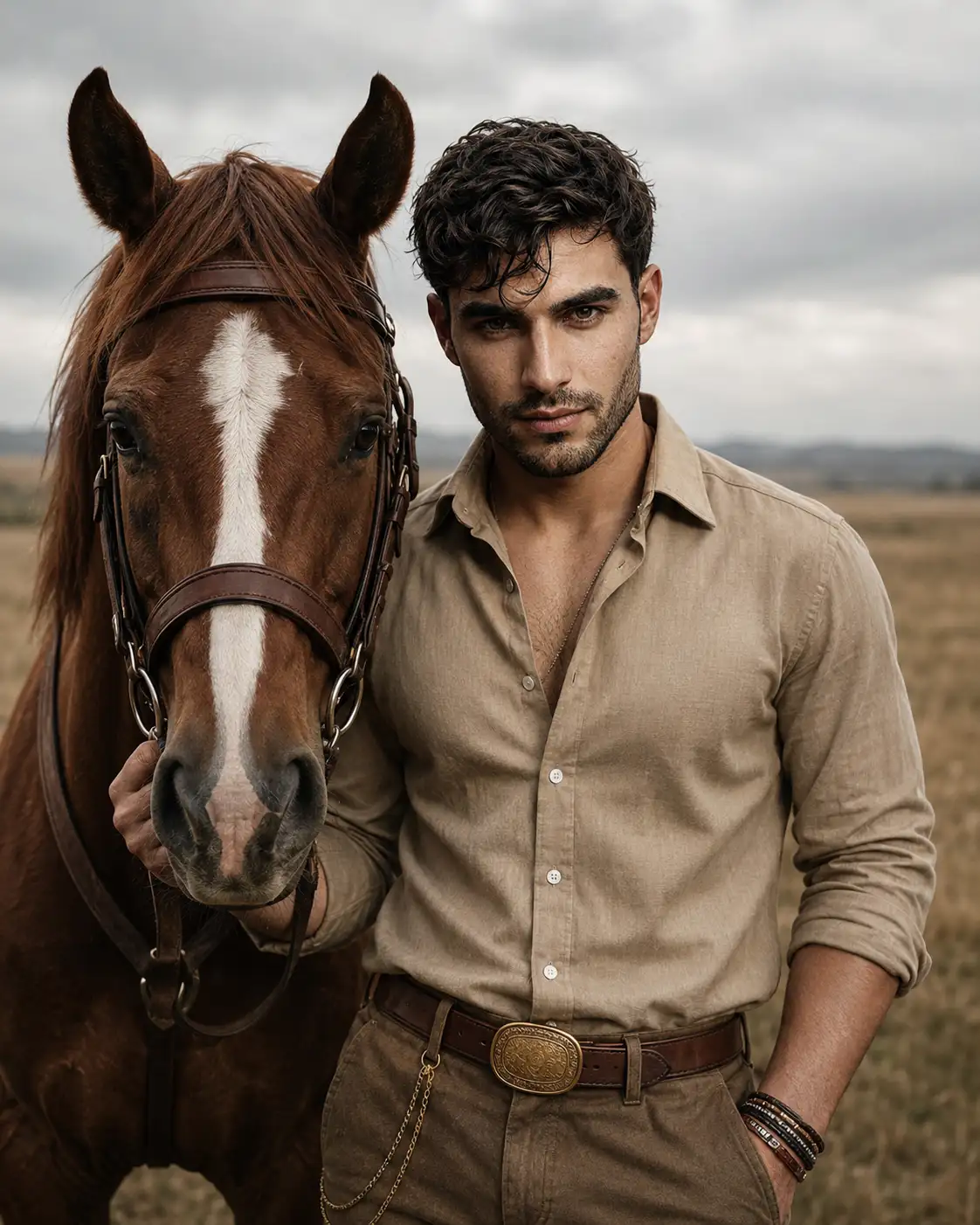
A cinematic, high-fashion equestrian portrait capturing a calm, confident presence beside a chestnut horse in an open overcast field, styled in earthy khaki tones with soft natural lighting.
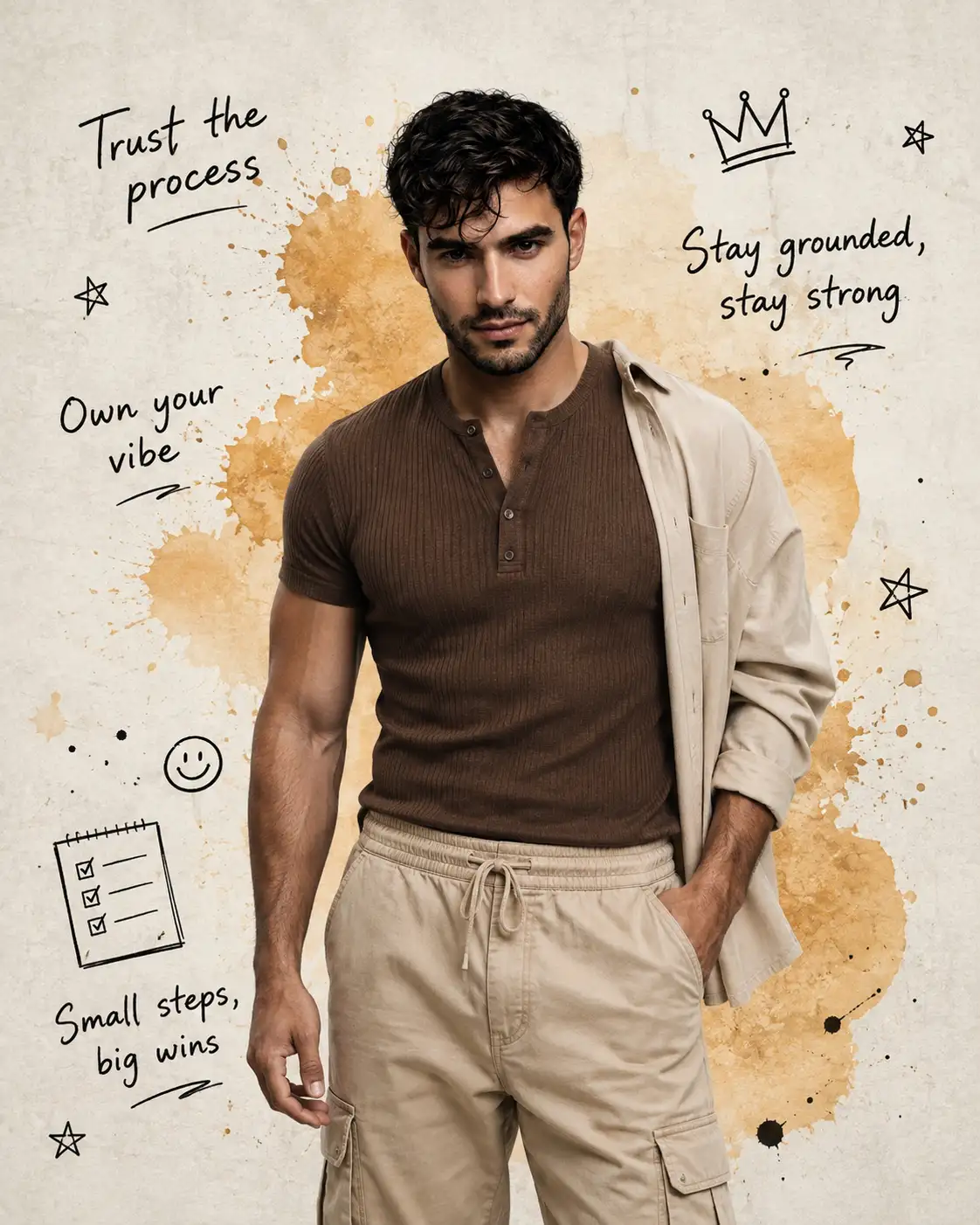
A photorealistic portrait blended with a hand-drawn sketchbook background — warm watercolor washes, ink doodles, and handwritten motivational text surrounding a true-to-life face.
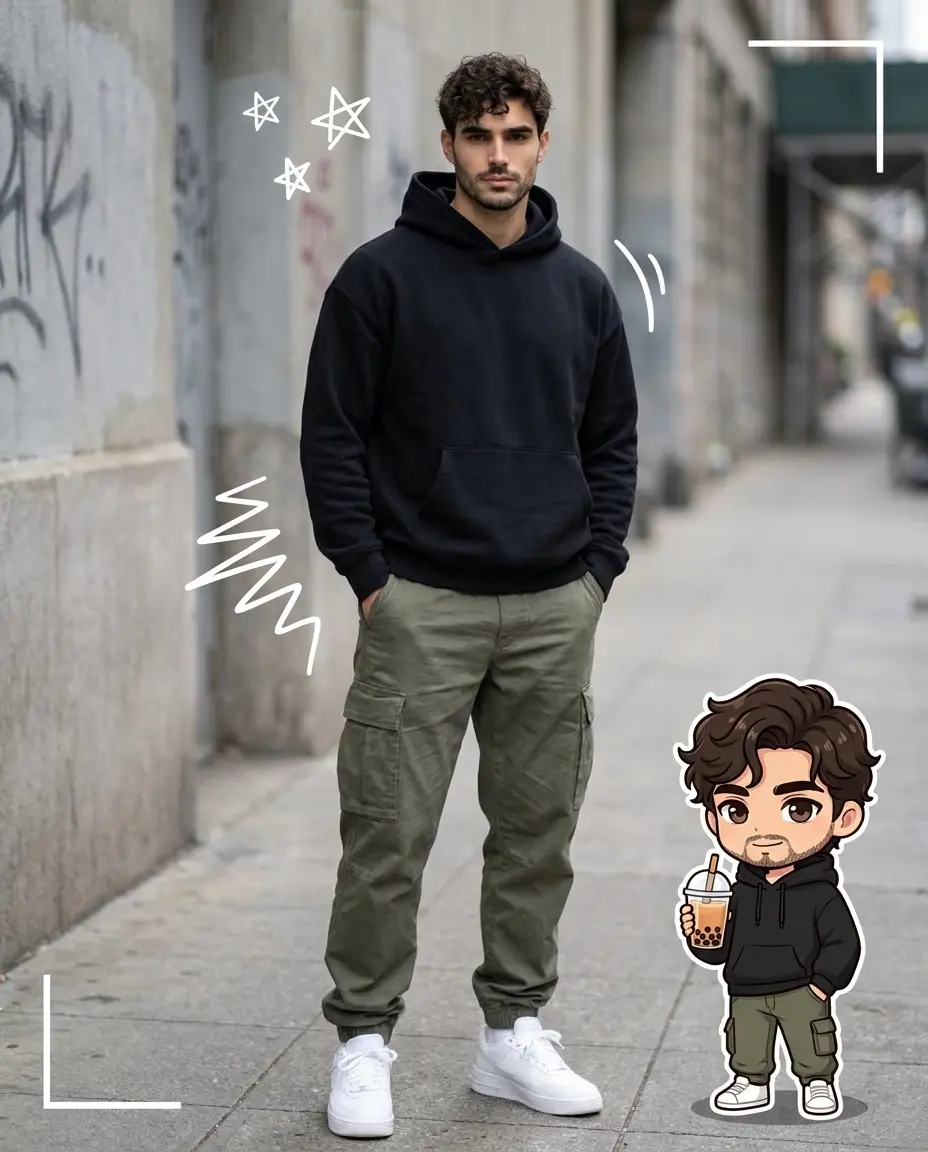
A trendy full-body street-style photo paired with a cute chibi mini-me sipping boba tea, framed with playful white doodle overlays — clean, casual, gender-neutral.
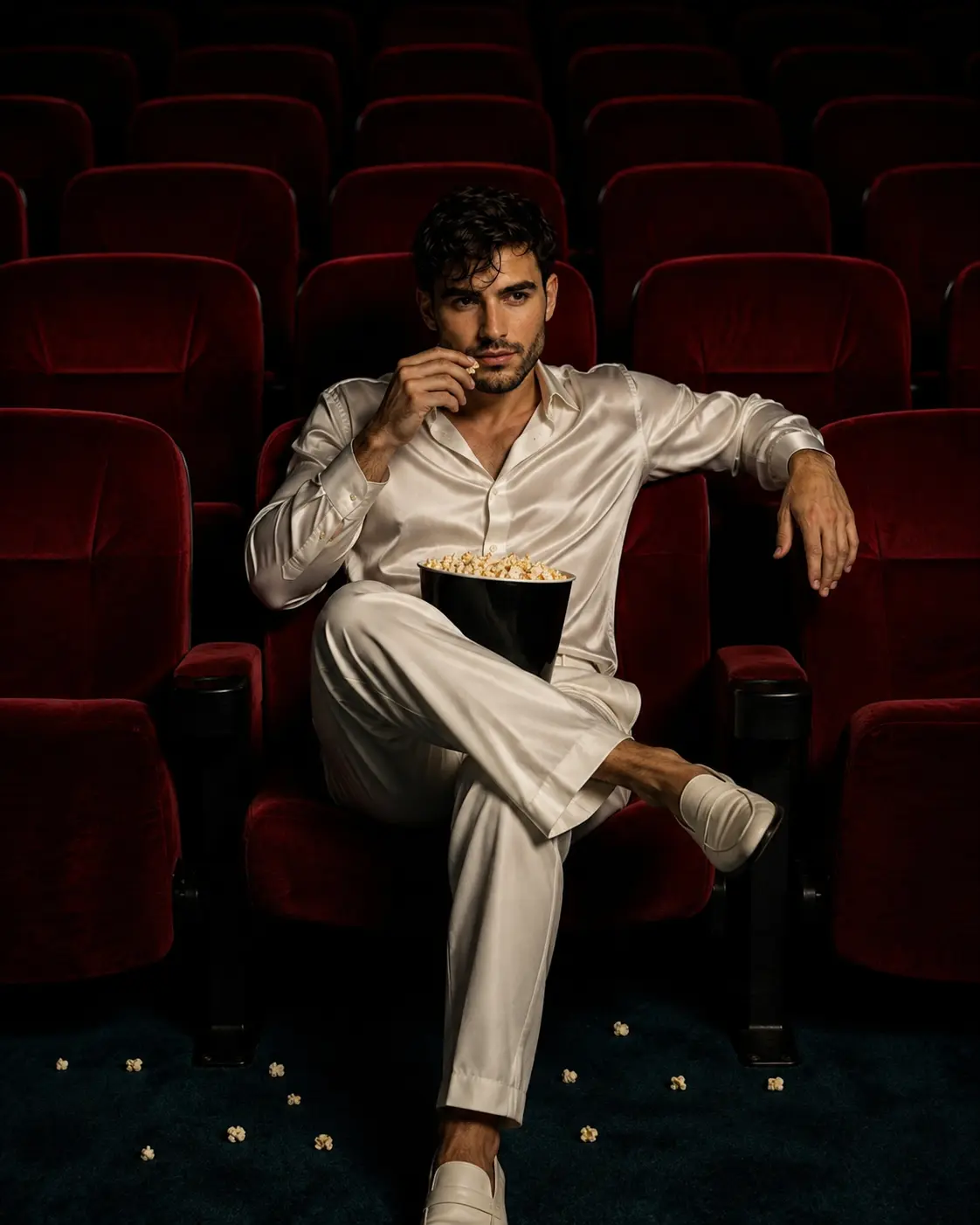
A glamorous, candid editorial portrait seated alone in a dark red-velvet movie theater, eating popcorn under moody cinematic lighting, with gender-adaptive pose and styling.
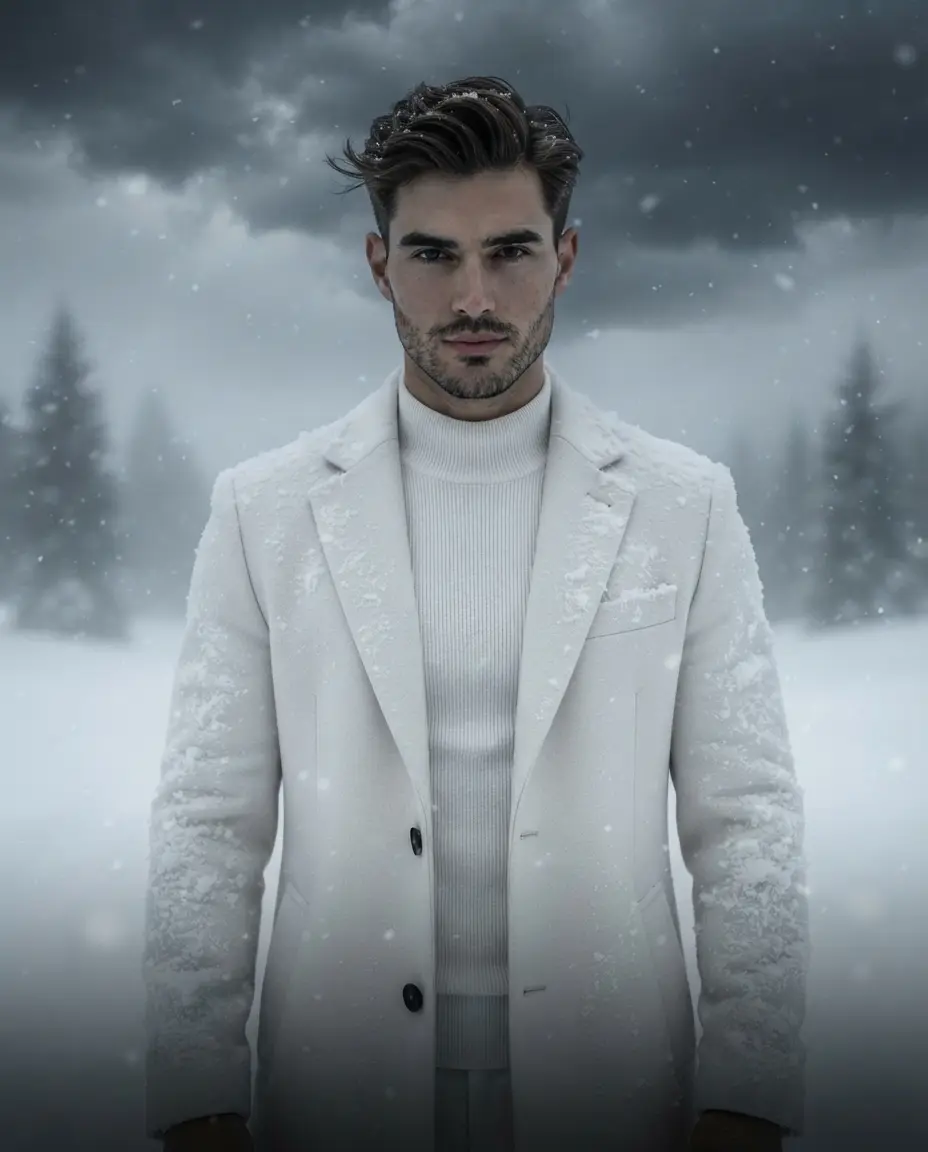
A moody, hyperrealistic fashion editorial portrait set in a snowy whiteout with dark storm clouds, strobe-lit contrast, and a monochrome winter suit — gender-adaptive and locked for consistent, near-square framing.